


E-commerce: volume-to-value strategy gaining traction, demonstrated by 5.0% increase in average price per parcel
- revenue at €937 million (HY 2025: €961 million), driven by positive price/mix impact and 6.4% volume decline
- international volumes, mainly from Asian web shops, down almost 15%, reflecting volatile market conditions, volume-to-value strategy and first impact related to implementation of import duty and handling fees
Platforms: continued growth in European e-commerce activities and decline in volumes from Asian web shops
- 7.1% volume decline: continued strong growth in European e-commerce volumes, more than offset by decline in volumes from Asian web shops (see under E-commerce) and mail volumes
Mail: successful implementation of major operational transition to standard mail delivery within 2 days
Pim Berendsen, CEO of PostNL, commented: ”In the first half of 2026, we delivered a solid performance despite volatile market conditions. Thanks to disciplined execution of our new strategy, we can report a resilient set of results and a strong improvement in free cash flow. At the same time, we acknowledge that external challenges are intensifying. Our solid foundation enables us to accelerate cost savings initiatives, resulting in a more competitive cost base and more commercial flexibility. Furthermore, we re-defined our Out-of-Home (OoH) strategy. These measures will strengthen our competitive position and support the path to our Breakthrough 2028 ambition.
“At E-commerce, the strategic transition from volume to value is progressing through a disciplined roll-out of our measures to balance volume, capacity and value. Our proactive approach is visible in the increase in the average price per parcel and improved operational efficiency, resulting in a resilient normalised EBIT performance in the first half of 2026, despite declining volumes. Volume development is mainly driven by weaker market growth in line with consumer spending and limited domestic market share loss related to our volume-to-value strategy. Meanwhile, our ongoing efforts on delivering an excellent customer experience are demonstrated by our strong NPS scores.
“At Platforms, we continued our focus on international growth via our asset-light models Spring and MyParcel, with European e‑commerce volumes driving revenue development. The value‑focused approach mentioned above applies equally here and is a main driver of the volume decline from our Asian customers. Furthermore, since June, these volumes have been further impacted by the preparation for the introduction of the import duty on non-EU parcels per 1 July. Asian web shops are focusing on adjusting their commercial propositions and logistics processes, which resulted in a shift in their market positions and impacted market volumes. We continue to invest in our strategy by developing our marketing and IT capabilities to strengthen our position as a strong player in the European e-commerce market.
“At Mail, we successfully completed the transition to standard mail delivery within two days. This major operational transformation was made possible by months of careful preparation and the dedication of thousands of colleagues across our organisation. It marks an important, but also intermediate, step towards safeguarding a future-proof postal service for everyone in the Netherlands. A next step to delivery within three business days as well as net cost compensation in transitional years are necessary to achieve long‑term viability. To avoid further delay, it is urgent that political decisions on the USO requirement are taken to finally amend the Postal Act. Meanwhile, we have formally initiated legal proceedings regarding compensation for the net costs of the USO and the withdrawal of the current USO designation. As long as decision-making continues to be postponed, uncertainty for thousands of our postal workers, customers and consumers will persist and the postal service will remain financially unsustainable.
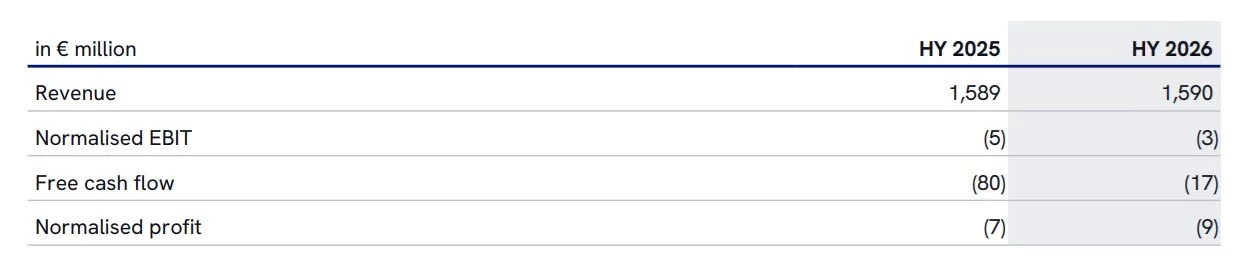
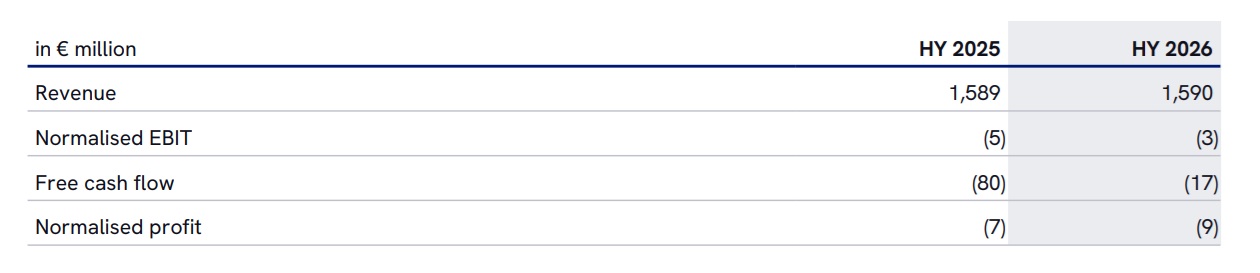
“Overall, normalised EBIT and free cash flow are developing in line with expectations and following the usual seasonal pattern. We remain confident in delivering our 2026 FY outlook for normalised EBIT and free cash flow. We are committed to disciplined execution of our new strategy and we expect to reach the inflection point in the trajectory towards delivering on our Breakthrough 2028 ambition in 2026.”